On April 28th, the International Strategy Center and Progressives for All of the Justice Party invited Nick Srnicek, lecturer at King’s College London and author of Platform Capitalism to its monthly Progressive Forum to talk about the political-economic of platforms. The interview was conducted by Norbert Morvan and edited for clarity and brevity by Matthew Phillips.
Read MoreIn order to see the intentions behind the Korea-Japan and Korea-US summits, we need to look at their various contexts. Yet, it appears that the highest priority for these various contexts is the US strategy for global dominance, and in particular the East Asian strategy. As for the Korean society’s attitude towards Japan, anti-Japanese sentiment is still strong. Despite this, the improvement of relations between Korea and Japan or the act of emphasizing future partnership can be seen as being in line with the US Northeast Asian strategy. Japan is the primary partner in the US strategy to contain China. Japan is also working hard to be faithful to this position. Under these circumstances, it is reasonable to view the improvement of Japan-Korea relations in Northeast Asia as a reflection of the will to realize a strong united front centered on the US strategy for Northeast Asia.
Read MorePlatform Capitalism is a set of economic tendencies that emerged with the rise of digital platforms (e.g. Amazon, Google, Facebook, Uber...). Platforms collect user data while facilitating the exchange of goods. This gives them great near-insurmountable advantages.
Read MoreIn the end it is a policy that represents the interest of the capitalists. From a global perspective, the Korean work hours are already very long, so it would not be feasible to formally extend them further. As a result, the government presented their flexibilization as a workaround. The government presented “mutual consent on working conditions”, but without a labor union’s power to defy the employer, this would obviously be a consent in name only. According to the information released by the Ministry of Labor last December, the union membership rate in Korea is only 14.2%, with 2.93 million members. It is only clear that working hours would increase under paper-thin consent in smaller, non-unionized workplaces. This increase in working hours serve only to increase the profit of capitalists. The availability of profit is limited under currently allowed working hours, and in the cutthroat competition between capitalists, securing additional working hours would be a godsend.
Read MoreYou’ve likely heard of International Women’s day, but let’s look a little deeper. How did it start? Why is it held on March 8th? Did you know it was originally ‘working women’s day’?
Here is a bite size overview of IWD’s origins and some of the celebrations and protests held around the world this week!
Read MoreBeyond an economic problem, the issue of food is a matter of survival. In a world, where global factors, outside our control, amplify volatility, government policy to manage this is important. This is why agriculture should not be approached simply from an economic perspective especially in the age of climate crisis. Unlike industrial products, food should not be considered a product that can simply be imported if we do not have enough.
Read MoreAna Cha is a member of MST’s National Coordination and does work at the national school with the International and political education collectives. She has been a member of the MST for the past 20 years and became involved in the northeast part of Brazil. We interviewed her for our monthly ISC Progressive Forum on Sunday Feb. 19th. The interview was carried out by the International Strategy Center’s Zoe Yungmi Blank and Mike Cannon.
Read MoreKorea has no choice but to raise interest rates in line with the global trend of interest rate hikes, but the situation in Korea is a little different from other countries. Hence the burden caused by the interest rate hike, even when taking into account some speculative elements, is causing financial difficulties to households and businesses.
Read MoreVijay Prashad is an Indian historian, journalist, and editor. He has written over 20 books including ‘The Darker Nations: A People's History of the Third World’, ‘Red Star Over the Third World’, and ‘Washington Bullets’, which was translated by the ISC. He is director of the Tricontinental: Institute for Social Research that recently published another work that was translated by the ISC, ‘Washington’s New Cold War: A Socialist Perspective’.
Vijay came to Korea for three days in early December to give a series of talks about the new cold war and other issues affecting the world. We met Vijay on his third afternoon in Seoul for a conversation about organizing and the importance of growing the left domestically and internationally.
Read MoreAccidents can occur in any form in our shared spaces of life and work. However, in cases where the accident could have been prevented in advance, yet people are killed from the neglect of corporations or the state, those cases are not accidents but murder. And if there are a large number of victims of the disaster, how is it any different than a massacre?
Read MoreOn Sept. 4th, 62% of voters rejected a new Constitutional proposal that would have replaced the existing Pinochet era one. To examine why the constitutional proposal was rejected and the tasks ahead for Chile’s left, on Oct. 27th, Dae-Han Song interviewed activist, politician, and journalist Taroa Zúñiga Silva for the ISC Progressive Forum.
Taroa Zúñiga Silva is a journalist for Globetrotter. She is also the co-editor of "Venezuela, Vortex of the War of the 21st Century" and a coordinating committee member of Argos, Observatory for Migration & Human Rights, and the co-founder of the Venezuelan Faldas-r collective for women's sexual and reproductive rights. This interview has been edited for clarity and brevity.
Read MoreSADD's "taking the subway at rush hour" is an act of disobedience toward a non-disabled-centered society, which does not guarantee the rights of the disabled as citizens as stipulated in the Constitution of the Republic of Korea. The responsibility lies with Korean politics and the government, who do not listen unless the disabled resort to screaming.
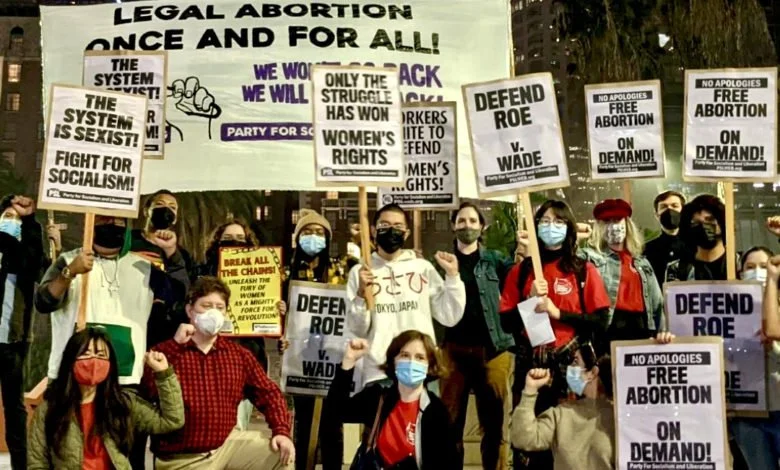
Read MoreOn Aug. 28, the International Strategy Center (ISC) and the Seoul Women’s Association held a Progressive Forum entitled “Post Roe v. Wade: Reproductive Rights Through a US Lens.” The following is the interview (conducted by ISC’s Zoe Yungmi Blank) with Joyce Chediac, a Redstockings member in the 1970s and currently an editor with the Party for Socialism and Liberation’s Liberation News and a staff member with its women’s publication Breaking The Chain. This is an abridged version edited for clarity and brevity.
Read MorePeople’s movement rapidly decreased as more people began working from home and many restaurants and cafes closed due to the lack of customers. In order to overcome the crisis, each country has injected huge amounts of money to restore the economy, but workers, ordinary people, small and medium-sized business owners and the self-employed are still experiencing much hardship.
Read MoreThe 2004 campaign to abolish discrimination against the disabled (through the Seoul subway and bus occupations) was able to achieve the installation of elevators to 90% of Seoul’s subways. Nonetheless, disability access to buses, taxis, and subway platforms is still lacking. As the Republic of Korea's constitution states, "all must be equal before the law." However, discrimination against race, LGBTQQ and disabled people still exists. On May 21, the International Strategy Center invited to our Progressive Forum Park Kyung-seok, co-President of the Solidarity Against Disability Discrimination, to hear about the history, achievements and tasks ahead for the disabled people’s struggle for mobility. This May Progressive Forum was co-organized by the Solidarity Against Disability Discrimination and the Korea Disability Forum, and co-hosted with the Democratic Socialists of America Disabilities Working Group and the Justice Party's International Progressive Politics Forum. Below is a summary of the conversation.
Read More"The movement for disability rights in Korea has been full-fledged since the 2001 struggle for the right to mobility. That year, the death of a person on a wheelchair after falling off a subway station lift sparked fierce protests and struggles demanding elevators at subway stations and low floor buses. Activists chained themselves to subway tracks and placed themselves in front of buses. The movement fought, often enduring insults, to expose society’s hypocrisy and change a society centered on the non-disabled towards one in which no one is marginalized."
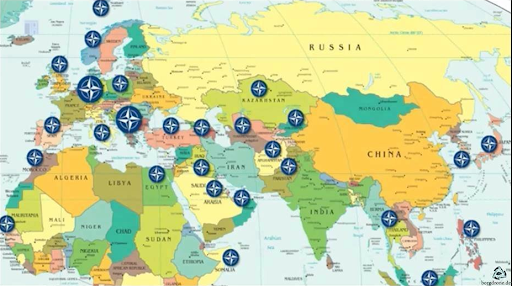
Read MoreOn April 10, the International Strategy Center held its monthly Progressive Forum on “How NATO and Sanctions Perpetuate War and Suffering.” It hosted Reiner Braun (executive director of the 131 year old International Peace Bureau, a founder of the No to NATO Network, and author of Einstein - Peace Now); and Vijay Prashad (journalist, author, and director of the Tricontinental Institute for Social Change). The event involved presentations, followed by questions from the ISC and audience members. Below is a synthesis of the presentations and Q&A.
Read MoreOn April 10, the International Strategy Center held its monthly Progressive Forum on “How NATO and Sanctions Perpetuate War and Suffering.” It hosted Reiner Braun (executive director of the 131 year old International Peace Bureau, a founder of the No to NATO Network, and author of Einstein - Peace Now); and Vijay Prashad, journalist, author, and director of the Tricontinental Institute for Social Change. The event involved presentations, followed by questions from the ISC and audience members.
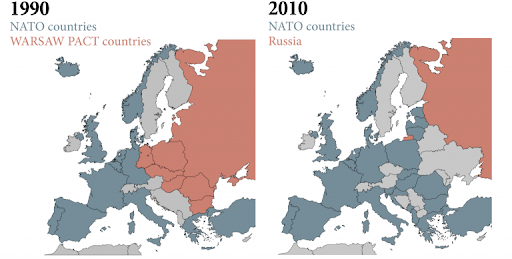
Read More“...Even the prominent US diplomat George Kennan, who authored the post Second World War American foreign policy towards the Soviet Union, warned, in 1998, that NATO expansion was not a good idea. Russians would "gradually react quite adversely, and it will affect their policies." It was a strategic mistake. There was no reason for this whatsoever. No one was threatening anyone else.
Now, there is an interesting dynamic in NATO expansion. We, of course, also have the agency of the countries between NATO and Russia. Most of these countries historically felt a threat from the east. And that's why their elites (in Poland, or Czech Republic, etc) wanted to be part of the NATO security structure. So there is also that local agency there. It's not only about two big powers.
However, when the expansion came closer and closer to the Russian border, that of course increased the tension. And so if American policy played a role that would be opening the door of NATO to Georgia and Ukraine. If we had a time machine and went back to 1991, and defined Ukraine, Belarus as neutral states, as happened with Finland and Austria, we wouldn't be experiencing many issues we are experiencing now. But that's, of course, a missed opportunity. Now, we have a completely different reality and dynamics…”
Read More